Blog · 17 July 2026
Part of: Ground · Kano· Status: Public alpha· For: Anyone who wants to walk a generated world
Hīkoi is out: walk the world, warts and all
Our first-person viewer for Kano worlds just went public as an early alpha — one baked planet, a viewer to walk it, and an MCP server so your AI can read the same ground you’re standing on.
The whole of Kano is less than two months old. In that time it has gone from nothing to whole planets grown from a single seed — geology that remembers its tectonics, rivers that actually run downhill, forests that answer to the soil they stand in. That pace is the thing we most want you to see, and today you can stop taking our word for all of it.
Hīkoi — te reo Māori for walk — is our first-person viewer for Kano worlds, and its first public alpha is now on GitHub. The download is one zip: the viewer, one baked planet, and a local MCP server so your own AI can interrogate the exact world you’re standing in. No account, no network, nothing phones home.
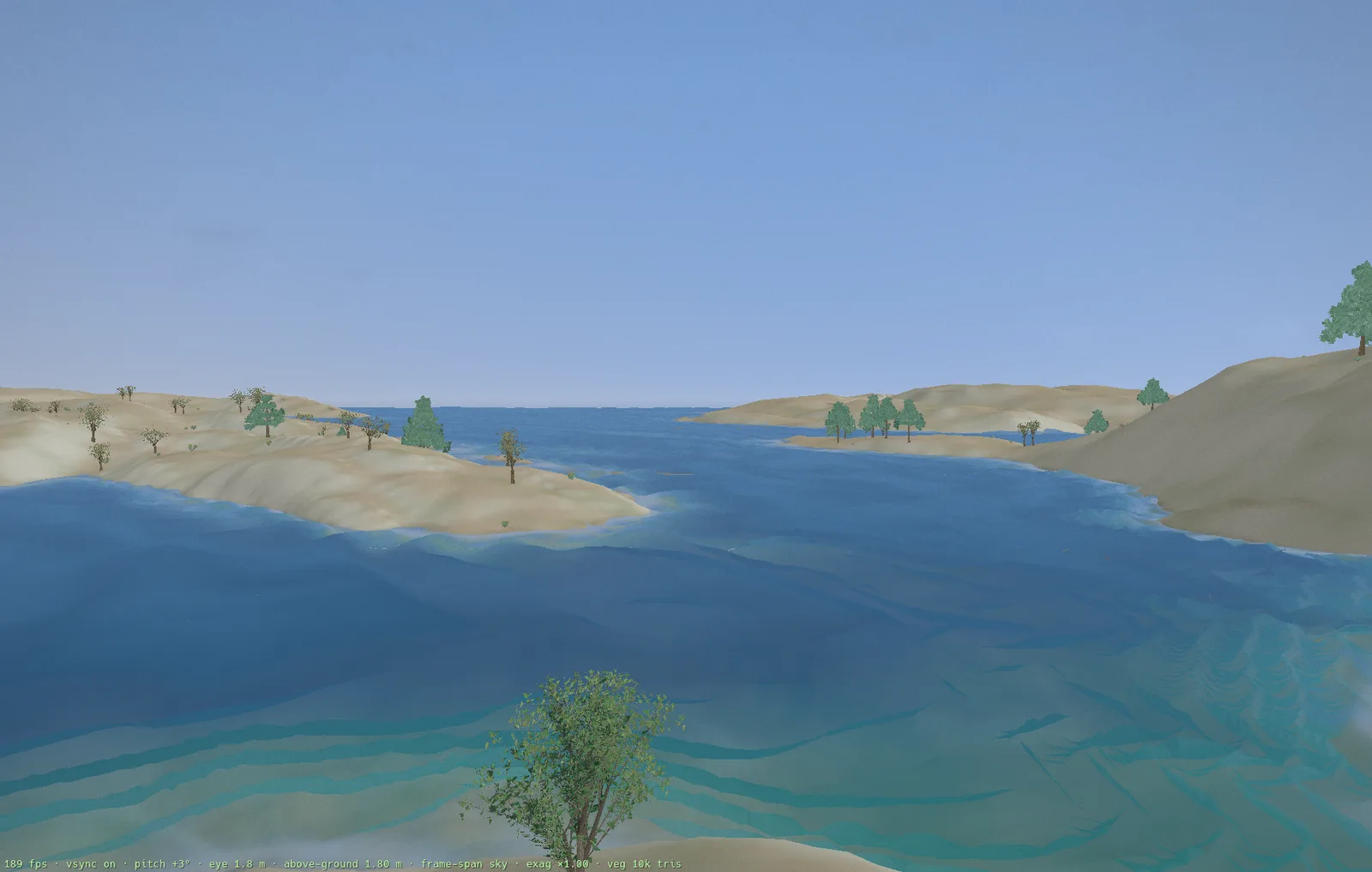
What you’re looking at
You start standing on the ground. Walk (WASD, Shift to run), look around, press G to pull back to orbit and drop somewhere else, or jump between eight curated places. The scene builds as you arrive — terrain first, then the vegetation fades in as it streams. Everything you see is generated from the world file: the coastlines, the river valleys, the tree in front of you, the colour of its leaves.
The part we care about most is the right mouse button. Point at a ridge, a valley, a stand of forest, and the world explains it — not generated commentary, but the recorded causal chain: the plate boundary that raised it, the rain shadow it casts, what grows there because of both. And because the bundled kano MCP server reads the same file the renderer does, you can hand the world to Claude or any MCP client and ask bigger questions — “find somewhere within 100 km where a mine would make geological sense, and justify it” — and what the AI says will always agree with what you see. Same world, two readers.
The honest part
This is an early alpha, rc-numbered, and we’d rather show it to you rough than sit on it until it’s smooth. Concretely:
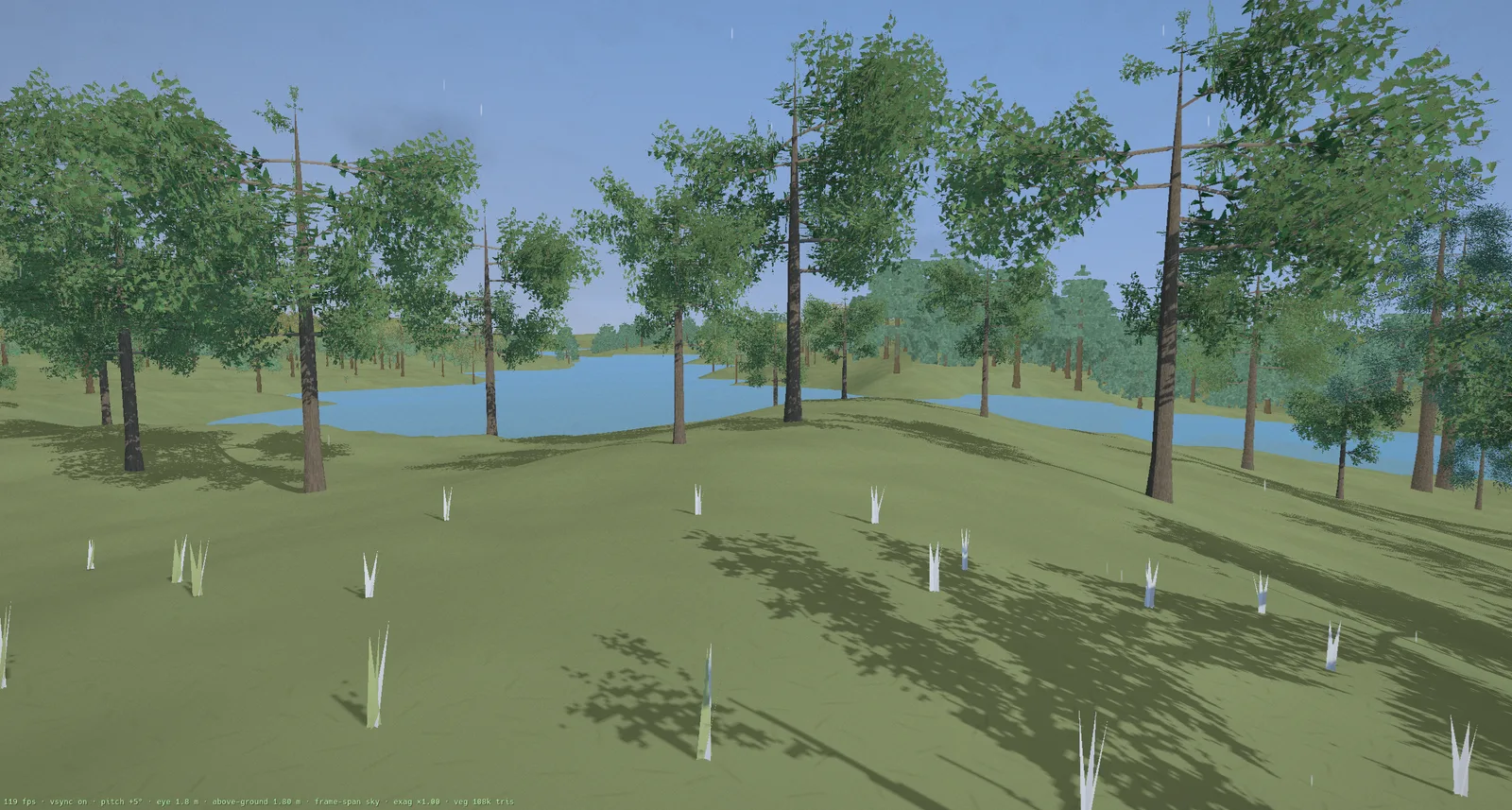
Performance is uneven. Open terrain and coastline run fast on most hardware. Dense forest doesn’t — a mature stand can push a lot of geometry, and on a mid-range GPU the frame rate can sag into the twenties until you’re past it. We know exactly where the cost is (the living layer is the most detailed thing in the world, and currently the least optimised), and it’s the top of the performance queue.
The builds are unsigned. Windows SmartScreen will warn you; macOS will make you right-click → Open. Linux needs Vulkan-capable drivers. The troubleshooting notes keep a list of known-good GPUs as reports come in.
It’s a viewer, not a game. There is nothing to win, no inventory, nobody home. You walk, you look, you ask why. That’s the whole loop — deliberately.
What this version is not (yet)
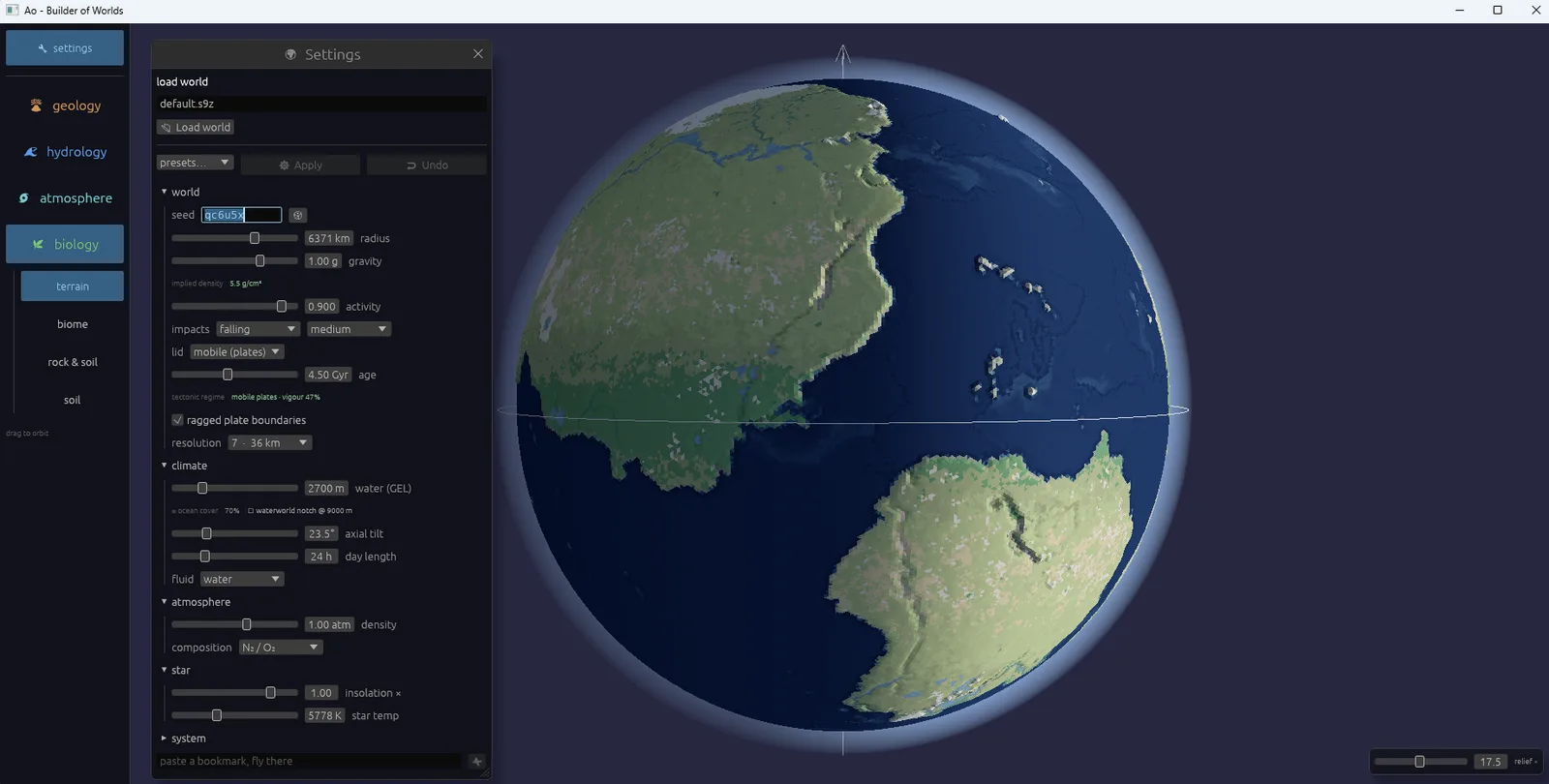
One world, not a generator. The showcase ships a single fixed, pre-generated planet. The generator that grew it is not in the box and won’t be — the showcase exists to let you interrogate a world, not create them. More curated worlds will follow; the seed makes that cheap.
Time mostly stands still. Under the hood every Kano world is a pure function of position, time, and seed — was this valley wet three months ago? has one true answer. The viewer barely exercises that yet: you get the world’s weather and light, but not a hand on the clock. Seasons, rewind, and time travel as a first-class control are where this is headed.
The MCP server is local-only. Your AI queries the world file on your machine. A hosted version — a world your agent can visit without you downloading anything — is on the roadmap, not in this release.
And the real destination isn’t a viewer at all. Kano is the ground layer of our stack — the point of a world that can’t lie is to put minds on it. Hīkoi is you, walking the ground our agents will live on. When the two halves meet, the thing you point at and ask why about might point back.
Building in public
We’re releasing this the way we work: early, rc-numbered, defects listed in the open. Two months took Kano from nothing to a planet you can stand on; the releases will keep coming and the frame rates will keep climbing, and you’re welcome to watch that happen — or hurry it along. File an issue if something breaks on your machine (GPU reports are gold), or tell us what you found out there.
Grab it from the releases page, and there’s more on the world layer itself on the Kano page.
— The Taniwha team
Building agents that need somewhere real to stand?
See what ships today, or tell us what you're building.